
The Secret to Better Interviews Isn’t Better Questions
Most people think a great interview is all about asking great questions.
It isn’t.
After producing hundreds of corporate videos and documentaries over the years, we’ve found that asking thoughtful questions is only about half the job. The other half—arguably the more important half—is listening.
Really listening.
The best interviewers aren’t busy reading off a list of prepared questions or thinking three questions ahead. They’re completely present in the conversation. They’re paying attention not only to the words being spoken, but to the pauses, the emotion behind a sentence, the slight change in someone’s voice, or the moment their body language shifts.
That’s usually where the real story begins.
It Starts Before the First Question
A successful interview starts long before the cameras begin recording.
One of the first things we do is simply have a conversation. We might ask how the drive into the city was, what they did over the weekend, or where they like to grab lunch near the office. It’s not just small talk.
Those few minutes accomplish several things at once. They allow us to set audio levels while the person speaks naturally, they help us understand their cadence and personality, and, most importantly, they remind the interviewee that they’re talking to another human being—not performing for a camera.
By the time the lights are on and the cameras are rolling, they’re already speaking comfortably.
Remember, This Isn’t Live Television
One of the first things we tell every interviewee is simple:
“This isn’t live TV.”
There is no audience watching in real time. You can make a mistake. You can stop mid-sentence. You can laugh. You can start over.
In fact, we expect it.
That single reminder immediately lowers the pressure in the room.
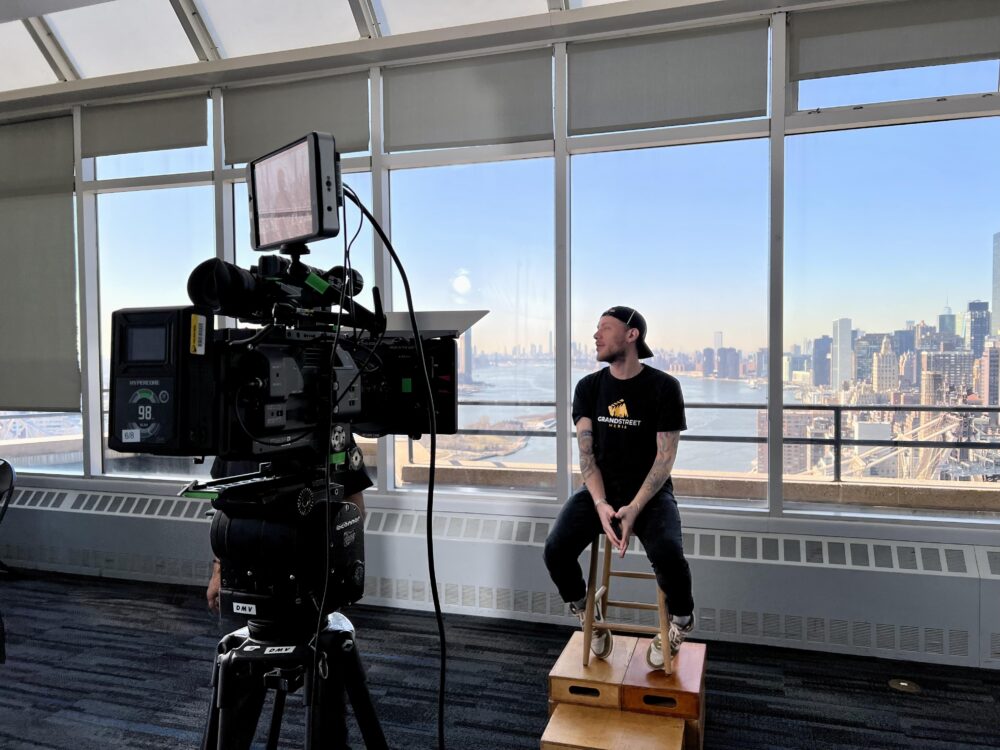
We also encourage people to think of the interview as a conversation rather than a performance. Yes, there may be five or six crew members standing around with cameras, lights, and monitors, but we ask them to imagine it’s just the two of us talking.
When people stop worrying about saying everything perfectly, they usually end up saying something far better than what they had rehearsed.
Listen More Than You Talk
One of the biggest mistakes new interviewers make is thinking about the next question before the current answer is finished.
We’ve all seen it happen. The interviewee is in the middle of explaining something meaningful while the interviewer is looking down at a notebook, mentally checking off questions.
The moment you do that, you’ve stopped listening.
Instead, maintain eye contact. Nod. Stay engaged. Let the person know you’re genuinely interested in what they’re saying.
People can feel when you’re listening.
More importantly, they can feel when you’re not.
Silence Is Your Greatest Interviewing Tool
If there is one technique we’ve learned over the years that consistently produces better interviews, it’s this:
Get comfortable with silence.
It sounds simple, but it may be the most underused skill in interviewing.
Most interviewers are uncomfortable with quiet. The instant someone finishes speaking, they feel compelled to fill the silence with another question. In reality, that’s often the exact moment they should say nothing at all.
Instead, maintain eye contact.
Smile.
Give a small nod.
Then wait.
Those few seconds can feel like an eternity to the interviewer, but they’re often when something remarkable happens. People naturally want to fill silence. As they continue thinking, they frequently move beyond the polished, rehearsed answer they started with and begin speaking from a much more genuine place.
We’ve lost count of how many times the best quote from an interview came after we thought the answer was finished.
It’s often the second answer that’s the real answer.
Those extra few seconds have produced heartfelt stories, unexpected admissions, and the emotional sound bites that ultimately become the centerpiece of an entire film. We’ve seen CEOs stop and reflect before sharing a personal story about a mentor who changed their career. We’ve watched nonprofit leaders pause, collect themselves, and then explain why their mission means so much to them. None of those moments were prompted by another question.
They happened because no one interrupted.
Learning to embrace silence requires patience and confidence. It feels awkward at first, but once you realize how often silence invites honesty, it becomes one of the most valuable tools you have as an interviewer.
Leave Room for Emotion
As an interview progresses, you begin to read people differently.
You notice their posture change. Their voice softens. Maybe they pause a little longer before answering. Sometimes their eyes well up just enough to let you know you’ve touched on something important.
When that happens, resist the temptation to interrupt.
Don’t rush to save them from the silence.
Don’t ask another question just because your outline says it’s time.
Let them stay with that feeling.
Often they’re processing a memory or searching for the right words. Those few quiet moments can lead to the most authentic parts of the interview.
If they eventually stop and look to you for guidance, keep the next question simple.
“How did that make you feel?”
Or…
“What were you just thinking about?”
Then get out of the way again.
Authentic emotion is impossible to fake, and audiences know the difference immediately. When someone is genuinely remembering a difficult moment or celebrating an important one, viewers don’t just hear the story—they feel it.
You’re Listening for the Story, Not the Script
Some of our favorite moments have never appeared on a shot list.
They weren’t in the interview outline.
They weren’t answers we expected.
They happened because someone felt comfortable enough to keep talking, because we allowed a little silence, or because we followed an unexpected thread instead of forcing the conversation back to our prepared questions.
That’s the beauty of interviews.
Whether you’re producing a documentary about a family overcoming adversity or filming a CEO discussing the future of their company, your job isn’t simply to collect information.
It’s to discover the story.
At Grand Street Media, we’ve learned that the best interviews don’t feel like interviews at all. They feel like conversations. And when you create an environment built on trust, patience, genuine curiosity—and the confidence to simply remain silent—you’ll often receive something far more valuable than the answer you were expecting.
You’ll capture the truth.