
The Top 5 Things No One Tells You About Getting Into the Film Industry
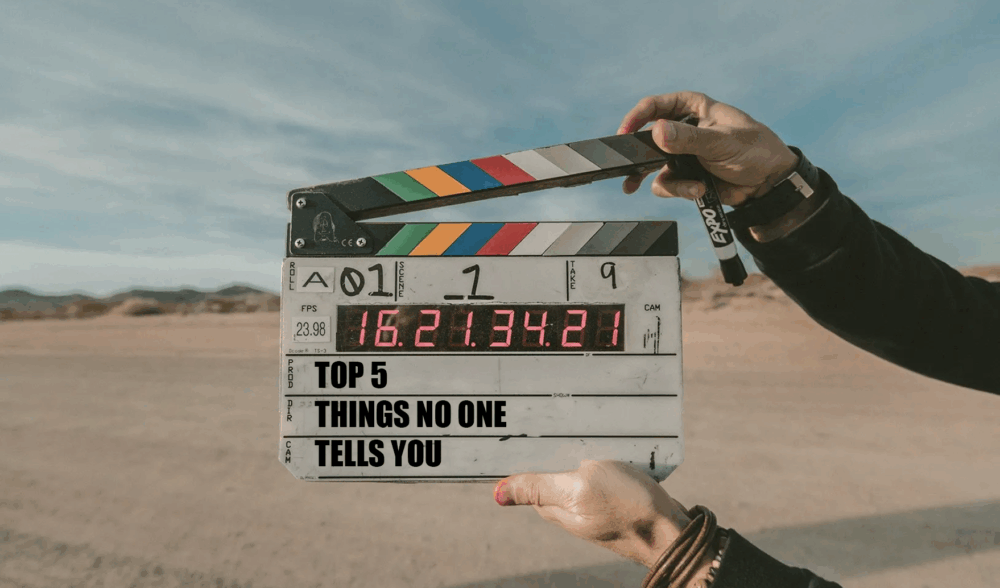
Every so often someone asks me the same question:
“My kid wants to get into film — what advice would you give them?”
Or…
“I’m thinking about getting into video production. What do you think?”
My answer usually surprises people.
I almost always say: you should probably find another profession.
Not because filmmaking isn’t meaningful.
Not because it isn’t creative.
And definitely not because it isn’t exciting.
But because the version of the film industry most people imagine looks nothing like the one they’re actually walking into.
If you — or your kid — are seriously thinking about this path, here are five things worth understanding first.
1. The Reality Looks Nothing Like the Dream
When people picture working in film, they usually picture Hollywood.
Big productions.
Famous actors.
Huge crews with clearly defined roles.
That world exists — but it represents a very small slice of the industry.
If you’re starting out, your day might look very different.
You could be standing five blocks away from set on a street corner telling people not to cross — while they completely ignore you and walk right past.
That’s not a metaphor. That’s an actual job.
And outside of Hollywood, most productions are small. Often under ten people. Sometimes far fewer.
On those jobs, you’re not “just” anything.
You might be driving the truck, unloading gear, setting lights, operating B camera, and still producing or directing the project.
The work isn’t glamorous most of the time.
It’s practical.
And you earn your way in by being useful.
2. Even When Work Is Good, You’re Still Searching for the Next Job
One of the hardest parts of this industry is the constant uncertainty.
There is no steady paycheck. No guaranteed income.
You can be incredibly busy — booked solid, working nonstop — and still find yourself quietly looking for what’s next.
Not because you want more.
Because you know that if you stop looking, there will come a time when the work disappears.
And when it does, it often happens without warning.
Projects are temporary. Income comes in waves. Your best month might be followed by your slowest.
Learning to live with that uncertainty — and plan for it — is just as important as learning how to shoot or edit.
A lot of talented people leave not because they aren’t good, but because the mental load becomes too heavy.
3. Life Gets Bigger — and You Can’t Do It Alone
Early on, the lifestyle can be exciting.
You travel.
You say yes to everything.
You work long days chasing momentum.
Then life changes.
You meet someone.
You have a kid — or kids.
Suddenly the same schedule hits differently.
This is usually when people realize they can’t keep doing everything themselves.
That’s when relationships become everything.
You start building your rolodex — crew members, producers, editors, audio techs, writers, motion designers, and other professionals you trust.
Many jobs come from referrals. Sometimes from clients. Sometimes from crew.
You may hire someone on one project, and months later they call you because they need your expertise on another.
That exchange is the real backbone of this industry.
Over time, you curate a group of people who are not only great at what they do — but good humans.
Because there’s a strong chance you’ll be working with them for the next decade or two.
4. Your Reputation Matters More Than Your Reel
Your work might open the door.
Your reputation determines whether it stays open.
Keeping your word matters.
That means creating realistic budgets — not numbers designed to win the job and then quietly grow later. Coming in on budget builds trust faster than almost anything else.
It means delivering what you promised, when you promised it.
And it means paying people on time.
There will be moments when you’re still waiting for your own payment — but if you committed to paying a crew member by a certain date, that promise should hold.
People remember who stood by their word.
If you’re good to people, people tend to be good to you in return — especially in an industry where everyone eventually works together again.
5. And All of This Was True Before AI
Everything above is what I would have told someone even a year ago.
Before the rapid rise of AI.
Now add this to the equation.
Think about how much AI has advanced in just the last year.
Now imagine what it looks like in five years.
Or ten.
Our industry is due for massive change.
How content is created, who creates it, how fast it’s made, what clients expect, and what roles even exist — all of that is going to shift.
The film business people see today will not be the same one a decade from now.
That doesn’t mean there won’t be opportunity.
But it does mean anyone thinking about entering this field should understand they’re stepping into a moving target.
Adaptability may soon matter more than any single technical skill.
Final Thoughts
Filmmaking can be incredibly meaningful work.
You get to tell stories.
You get to create something real.
You get to collaborate with interesting, passionate people.
But it’s not a career you fall into lightly.
It’s one you choose with honesty — about the lifestyle, the uncertainty, the responsibility, and the future.
And if after knowing all of that… someone still wants it?
Then they might actually be built for it.