
Documentary Interviews: Why the Best Answers Come After the Question You Didn’t Plan
Anyone who’s sat through a corporate or documentary interview knows that the magic doesn’t always happen on the first take. Sure, you can prepare questions, rehearse talking points, and have a list of bullet points ready — but the truth is, some of the best answers come after the question you didn’t plan to ask.
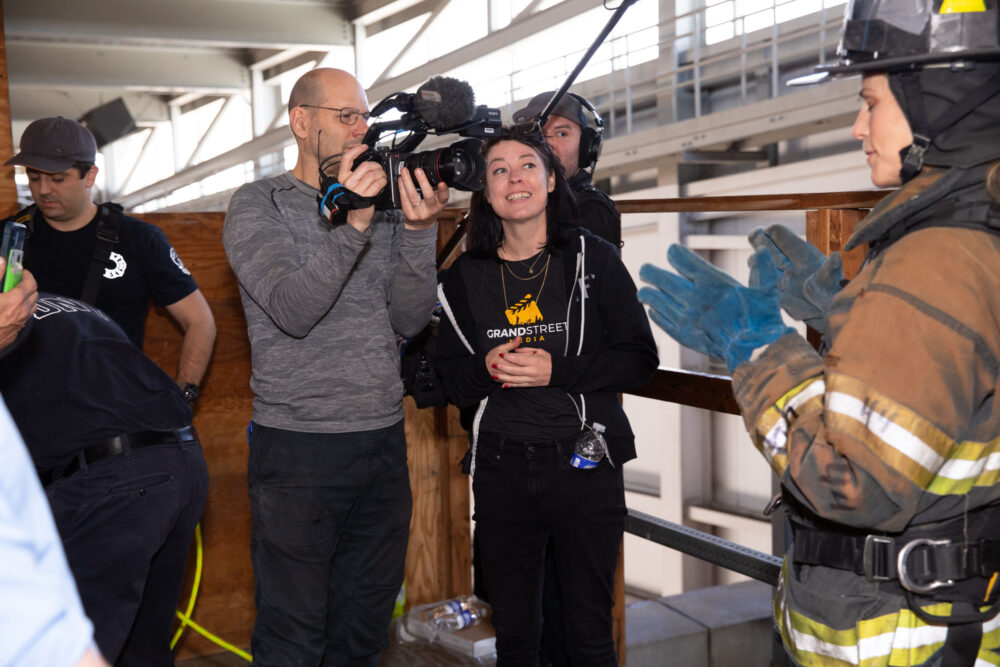
At Grand Street Media, we’ve learned that interviews are less about rigidly following a script and more about creating a space where people feel comfortable sharing, thinking aloud, and telling their story naturally. When interviewees are relaxed, they often reveal unexpected insights, emotional moments, or humorous anecdotes that make the content feel authentic and engaging. It’s these unplanned responses that often become the heart of a story — the moments viewers remember, relate to, and connect with emotionally.
Creating that space starts long before the camera rolls. One of the most effective ways to help someone relax is simply to have a conversation first. Ask about their commute, their favorite local spot for lunch, or a small story from their week. These seemingly trivial questions serve multiple purposes: they help break the ice, give the interviewee time to warm up, and provide the crew with natural audio levels while the person talks. By the time the interview begins, they’re already speaking in a natural rhythm, which makes the final footage feel far more organic.
Once the camera is rolling, there are a few techniques we use to ensure the interview stays dynamic and authentic:
- Listen actively and maintain eye contact: Don’t start thinking about your next question while the interviewee is still answering the first. Stay present, nod, and show that you’re engaged. If you give people the space to talk, they often keep talking — sometimes offering insights or anecdotes that would never have come out if you jumped in too quickly. That pause can be pure gold, resulting in the kind of sound bite that elevates your entire video.
- Encourage storytelling: Instead of yes/no answers, prompt the interviewee to share a story. Personal anecdotes are far more engaging than abstract statements.
- Normalize mistakes: Remind them that it’s not live TV. They can stumble, laugh, or start over — the goal is authenticity, not perfection.
- Leave space for emotions: As the interview progresses, you can often read someone’s body language and tell when they’re starting to feel emotional. That’s a moment to sit back and let them feel it. Don’t interrupt or try to redirect them; let them stay in their train of thought. If they do stop and look for the next question, a gentle prompt like, “How did that make you feel?” or “What were you just thinking about?” can help them continue. Genuine emotion resonates with audiences in a way rehearsed answers never can.
Give the Audience Context in Every Answer
In many documentaries and corporate videos, the question being asked is often cut from the final edit, leaving only the interviewee’s response. This means answers need to stand on their own so viewers can understand them without hearing the question.
We usually explain this to interviewees like this: “The audience won’t hear the question, so try to incorporate the answer into your response. For example, if I asked, ‘What’s your favorite ice cream?’ you wouldn’t just say ‘Chocolate.’ Instead, you’d say, ‘My favorite ice cream is chocolate.’ That way, even without hearing the question, the audience immediately understands what you’re talking about.”
It’s normal for people to forget this throughout the interview, so gentle reminders may be necessary. However, if you coach them on this approach at the beginning and give them a few practice responses, they usually do much better once the camera is rolling. Over time, it becomes second nature, helping to create clear, concise answers that are easy to edit and fully understandable on their own.
Another key element is preparation for post-production flexibility. Even with a smooth interview, editors often have to “Frankenstein” responses — combining partial sentences, removing “umms” or “ahhs,” and shaping a clear, concise narrative without altering meaning. The more natural, varied responses an interviewee provides, the easier it is to craft a compelling story that flows seamlessly. B-roll becomes essential here, covering cuts and smoothing transitions so the edits feel invisible.
Ultimately, great interviews aren’t about reading a script perfectly or sticking rigidly to a list of questions. They’re about creating trust, encouraging conversation, and capturing the human moments — including the emotional ones — that make a story come alive. When you do this well, interviews feel less like a production and more like a shared experience, and that’s exactly what draws viewers in and keeps them engaged.
At Grand Street Media, we approach every interview with patience, curiosity, and a focus on authenticity. By blending preparation with flexibility, encouraging storytelling, leaving space for emotion, and embracing the unplanned, we help interviewees reveal their best answers — the ones that truly make a video memorable.