
Do You Really Need 4K for Your Next Video?
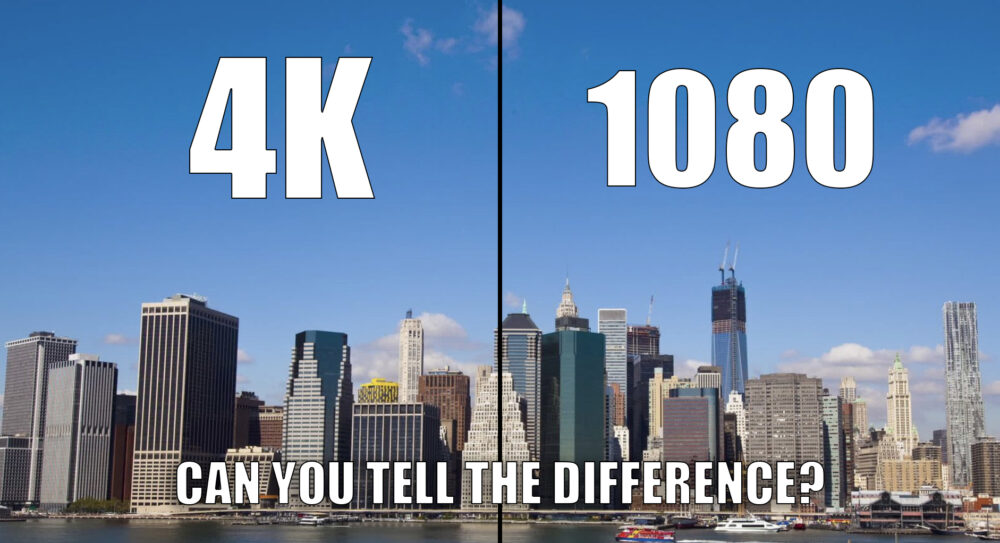
If you’re planning a video for your organization, you’ve probably heard this question come up:
“Shouldn’t we shoot this in 4K?”
It’s a fair question. Higher resolution sounds like higher quality — and when budgets are involved, no one wants to feel like they’re settling for less.
Here’s the industry truth many production companies won’t say clearly:
Shooting in 4K does not automatically make your video more effective — especially if it’s primarily being used online.
And for most corporate and nonprofit videos, effectiveness matters far more than resolution.
How Your Audience Actually Watches Video
Most organizational videos are viewed:
- on websites
- in email campaigns
- on LinkedIn or social media
- on laptops and mobile phones
Even if a video is uploaded in 4K, online platforms compress it heavily. By the time it reaches your audience, much of that extra resolution has been reduced.
In real-world viewing conditions, a professionally shot 1080p video will often look just as good — or better — than a poorly planned 4K video.
Your audience isn’t evaluating sharpness.
They’re deciding whether to keep watching.
When Shooting in 4K Does Make Sense
That said, higher resolution absolutely has its place — and we use it when it serves a clear purpose.
For example:
- If a video will be shown on large screens at conferences or fundraising events
- If it’s designed for projection or presentations
- If we want the flexibility to turn one camera angle into both a wide shot and a close-up
- If reframing or cropping will be needed during editing
In these cases, 4K isn’t about looking better — it’s about flexibility and future use.
The key is intention. Resolution should support the message, not distract from it.
What Resolution Doesn’t Solve
Higher resolution does not improve:
- unclear messaging
- uncomfortable interviews
- poor lighting
- distracting environments
- weak storytelling
In fact, higher resolution often makes these issues more noticeable.
What viewers interpret as “professional” has far more to do with how a video is planned, filmed, and edited than how many pixels it contains.
What Actually Makes a Corporate or Nonprofit Video Work
Strong videos — especially for mission-driven organizations — rely on:
- thoughtful interview questions
- making people feel comfortable on camera
- clean, consistent lighting
- clear audio
- pacing that respects attention spans
- editing that highlights emotion and clarity
These are the elements that build trust with an audience.
Whether you’re telling a donor story, explaining your services, or highlighting impact, people respond to authenticity and clarity — not technical specs.
A compelling story in 1080p will always outperform a forgettable story in 4K.
Using the Right Tool for the Right Job
At Grand Street Media, we don’t believe in using technology just because it’s available. We believe in using it when it supports your goals.
Sometimes that means shooting in 4K.
Sometimes it doesn’t.
What matters most is understanding:
- where the video will live
- who will watch it
- what action you want them to take
When those questions are answered first, technical decisions become much clearer.
Because at the end of the day, your audience won’t remember the resolution.
They’ll remember how the video made them feel — and whether it helped them understand your mission, your message, or your impact.
That’s where real value lives.